Sat, Jun 6, 2026

All Stories

Zenith Bank Gross Earnings rises by 5% to N696.5bn

In spite of a challenging macroeconomic environment exacerbated by the COVID 19 pandemic,Zenith Bank Plc announced an impressive result for the year ended December 31, 2020.The bank,achieved 5% rise in gross earnings,to N696.5 billion from N662.3 billion reported in the previous year.

According to the bank’s audited financial results for the 2020 financial year presented to the Nigeria Stock Exchange (NSE) on Tuesday, the Group recorded 8% growth in non-interest income from NGN232.1 billion in 2019 to NGN251.7 billion in 2020 and a 1% increase in interest income from NGN415.6 billion in 2019 to NGN420.8 billion in 2020.

Profit before tax also increased by 5%, growing from N243.3 billion to N255.9 billion in the current year. The increase arose from a combination of growth in the topline and a significant reduction in interest expense. Interest expense reduced from N148.5 billion in 2019 to N121.1 billion in 2020, significantly increasing the net interest income from NGN267.0 billion in 2019 to NGN299.7 billion in 2020.

The Group’s increased retail activities translated to a corresponding increase in retail deposits and loans. Thus, retail deposits grew by NGN612.7 billion from NGN1.11 trillion to NGN1.72 trillion year-on-year (YoY), while savings balances significantly grew by 88% YoY and closed at NGN1.16 trillion. This retail drive, coupled with the low-interest yield environment, helped reduce the cost of funding from 3.0% to 2.1% and also reduced interest expense. However, the low-interest environment also affected the net interest margin, which declined from 8.2% to 7.9% in the current year due to the re-pricing of interest-bearing assets. Operating costs grew by 10% YoY but are still tracking well below inflation which at the end of the year stood at 15.75%. Although returns on equity and assets also reduced from 23.8% to 22.4% and from 3.4% to 3.1%, respectively, the Group still delivered improved Earnings per Share (EPS), which grew 10% from NGN6.65 to NGN7.34 in the current year.

The Group also increased corporate customer deposits, which alongside the growth in retail deposits, delivered total deposit growth of 25%, to close at N5.34 trillion, driving growth in market share. Total assets also increased significantly by 34%, from N6.35 trillion to N8.48 trillion. Despite the COVID-19 pandemic and its associated challenges, the Group managed to create new viable risk assets as gross loans grew by 19%, from N2.46 trillion to N2.92 trillion. This was achieved while maintaining a stable and low overall NPL ratio of 4.29% (2019: 4.3%) across the entire portfolio and an increase in the cost of risk from 1.1% to 1.5%, reflecting the elevated risk environment in 2020. The Group recorded impressive liquidity and capital adequacy ratios of 66.2% and 23.0% and remained above regulatory thresholds of 30% and 15%, respectively.

In a demonstration of its commitment to its shareholders, the bank has announced a proposed final dividend payout of N2.70 per share, bringing the total dividend to N3.00 per share.

As a testament to this superlative performance and in recognition of its track record of excellent performance, Zenith Bank was voted as Bank of the Year (Nigeria) in The Banker’s Bank of the Year Awards 2020, Best Bank in Nigeria in the Global Finance World,Best Banks Awards 2020 and Best Corporate Governance & Financial Services; Africa 2020 by the Ethical Boardroom. Also, the bank emerged as the Most Valuable Banking Brand in Nigeria, for the fourth consecutive year, in the Banker Magazine ;Top 500 Banking Brands 2021 and Number One Bank in Nigeria by Tier-1 Capital;2020 Top 1000 World Banks; Ranking published by The Banker Magazine.

Similarly, the bank was recognised as Bank of the Decade at the ThisDay Awards 2020, Retail Bank of the year at the 2020 BusinessDay Banks and Other Financial

Institutions (BOFI) Awards, and Best Company in Promotion of Good Health and Well-Being as well as Best Company in Promotion of Gender Equality and Women Empowerment at the Sustainability, Enterprise and Responsibility (SERAS) Awards 2020.

Zenith Bank Gross Earnings rises by 5% to N696.5bn

Dangote Commits to Protecting Shoreline, Fishing Activities in Lekki Communities


 The Management of Dangote Petroleum Refinery and Petrochemicals on Thursday, reiterated its commitment to protecting the shorelines and fishing activities in Lekki coastal environment, thereby allaying the fears of fishermen and other residents in the area.
 
The company said its Dangote Jetty has been constructed with Sandbar Breakwater technology, which is a unique concept that follows the building-with-nature philosophy. 
 
According to Dangote, the Sandbar Breakwater is capable of reducing costal erosion and protecting the shorelines by interrupting wave energy, and allowing sand to accumulate along the coast.
 
General Manager (Survey), Dangote Oil Refining Company Limited, Rajnish Kumar Gupta, who spoke on behalf of the Head, Maritime & Ports Infrastructure, Dangote Oil Refining Company Limited, Capt. Rajen Sachar, described the concept as based on the knowledge and principles of the local natural system and its dynamics, which makes optional use of the ecosystems available. 
 
He said the concept does not interfere with wild-life and fishing activities in the coastal areas. “Sandbar Breakwaters don’t interfere with wildlife habitats. They may change how wave transmission energy occurs, but this doesn’t change the fact that animals will still have a place that they can call home,” he added.
 
Sachar stated: “A conventional breakwater that consists of rock would lead to fast coastline advance at the west side, ultimately burying the expensive rock and thereby losing its function. The Sandbar Breakwater is designed as such that it mostly consists of sand. The Sandbar is morphologically dynamic and nature shapes it to an equilibrium stable profile. It minimises the use of hard materials (rock) and thereby makes optimal use of locally available materials. The Sandbar profile ensures a continuous safe and calm harbour basin. A small scale sand engine at the down drift side of the port (East) temporarily mitigates the coastal retreat. Continuous down drift coastline retreat is an inevitable part of a construction of a port. This can be mitigated by the deployment of a sand engine from time to time.”
 
He explained that Sandbar breakwater makes optimal use of the ecosystems available. “Breakwater is an artificial offshore structure protecting a harbour, anchorage, or marina basin from water waves. Breakwaters intercept longshore currents and tend to prevent beach erosion and by changing wave direction, which reduces longshore drift. Breakwaters are barriers built offshore to protect part of the shoreline. They act as a barrier to waves, preventing erosion that can impact on communities,” he added.
 
He disclosed that the facility can handle vessels up to 16,000MT DWT with dimensions 160m x 25m x 7.75m. “The facility consists of hard standing area and Jetty Quay built on Secant & Anchor piles (138m long) with an attached isolated mooring dolphin (at 52m from edge of quay wall). Its approach channel is 130m wide with a turning basin diameter of 300m and a depth of -8m CD. It is designed with both the RoRo Ramp (length 30m and width of 22m) or LoLo (Lift-on Lift-off) capability depending upon the nature and size of cargoes. DQL Jetty is equipped with 1 no of 750 Tonne Crawler Crane and 2 nos of 260 Tonne Mobile Crane. The Jetty has a soil stabilised back up pavement covering approximately 17,750 square metres, available for stacking the cargoes prior their onward movement to the refinery.”
 
He added that the project would reduce the pressure on the road as a result of transportation of personnel to the Dangote Oil Refinery site. According to him, the jetty would eliminate road transport risk and support the timely and successful construction of the refinery in line with the aspiration of Nigerians and investors.
 
He explained that the RoRo Jetty would handle the receipt of all refinery project cargo including over dimensional cargoes and subsequent haulage to the designated laydown areas for the construction of the Dangote refinery
Dangote Commits to Protecting Shoreline, Fishing Activities in Lekki Communities

Finishing 2020 Strong! United Capital records Double Digit Growth with Profit Rising by 61%


United Capital Plc, foremost Pan-African financial and investment services group, has announced its audited results for the full year ended December 31, 2020, recording double-digit growth across all its major income lines.

Despite the Covid-19 pandemic and the resultant challenging operating environment, the investment institution leveraged on increased efficiency to deliver an impressive 61 per cent year-on-year growth in profit before tax to N7.95 billion compared with N4.95 billion at the end of 2019; while profit after tax stood at N7.81 billion, showing an increase of 57 per cent above the N4.97 billion it closed in 2019.

United Capital also recorded a 50 percent year-on-year growth in gross earnings to close at N12.87 billion in December 2020, compared to N8.59 billion recorded in the similar period of 2019. 

On account of a significant 54 per cent increase in investment in financial assets, United capital’s total assets also rose by 48 per cent to N224.75 billion in the period under review, compared to N150.46 billion recorded at the end of the 2019 financial year; while shareholders’ funds grew to N24.43 billion rising by 25 per cent from 19.59 billion a year earlier.

On the back of the strong performance, the Directors of United Capital have proposed a dividend of 70k per share, amounting to a total of N4.2 billion dividend to be paid upon ratification by shareholders at its forthcoming AGM. The 70k dividend per share, which is higher than the 50k per share declared in 2019, is payable to shareholders whose names appear on the Register of Members at the close of business on March 5, 2021.

The Group Chief Executive Officer, United Capital Plc, Mr. Peter Ashade, expressed delight on the performance, which according to him is cheering news despite the challenges that most companies faced in the year 2020. 

He said, “I am pleased to inform all stakeholders that United Capital delivered impressive returns amid the unprecedented environment worsened by the pandemic during the 2020 financial year with remarkable double-digit growth in Revenue, PBT and PAT and solid performance across key business parameters.

“This empowers us to adopt a more positive outlook for the year 2021 as we navigate the tough terrain compounded by a second wave of the COVID-19 pandemic among other severe economic challenges,” Ashade noted.

Speaking on its plan for the 2021 financial year, Ashade said, “Despite the tough operating environment, all stakeholder groups can be assured of our commitment to providing best-in-class solutions to diverse client segments and delivering superior returns to shareholders even as we work with regulatory authorities to strengthen the broader financial system as the domestic economy continues on the path to recovery in the year 2021.”

Finishing 2020 Strong! United Capital records Double Digit Growth with Profit Rising by 61%

Fidelity Bank issues largest ticket Tier II local bonds in Nigeria

Fidelity Bank Plc has successfully issued N41.21billion in fixed rate unsecured subordinated bond, with a 10-year tenor, at 8.5 per cent coupon rate, due in 2031.

The bank said the bond issuance was fully subscribed, noting that total investor interest and commitments in the bonds were N56.6billion.

This, it said, added to the impressive portfolio of landmark transactions structured by Fidelity Bank and underscored its capacity to successfully execute debt capital market transactions.

The transaction is a landmark achievement in the Nigerian domestic debt market for being the largest corporate bonds ever issued by a Nigerian bank.

In December, the bank had announced plans to issue fixed income securities with a 10-year tenor to support the growth and development of Small Medium Enterprises, Retail Business as well as its technology infrastructure. It conducted the debt issuance under its registered N100billion bond issuance programme.

Speaking on the significance and success of the bond issuance, Chairman, Fidelity Bank, Mustapha Chike-Obi, said the bond issuance further demonstrated the bank’s confidence in Nigeria’s debt market.

“It also validates the continued investor confidence in our corporate strategy and aspirations, strong corporate governance structure and solid and stable executive management team with robust history of superior financial performance and returns,” Obi explained.

In her comments, Chief Executive Officer, Fidelity Bank, Mrs. Nneka Onyeali-Ikpe, noted that proceeds from the transaction would be utilised to support growth in the issuer’s risk assets in SME and retail business as well as investments in technology & retail infrastructure.

This, she said, was in line with the bank’s Tier I aspirations, noting that the bank’s business fundamentals had remained strong despite the challenging economic environment occasioned by the coronavirus pandemic and the attendant recession.

“The successful bond issuance highlights the confidence in the Fidelity brand, as well as our capability to expand our funding sources, and deliver innovative financial services to our esteemed customers,” she added.

The issue was assigned a rating of A- by Agusto, and A by Datapro and will be listed on both the Nigerian Stock Exchange (NSE) and FMDQ Securities Exchange Limited.

Fidelity Bank is a full-fledged commercial bank operating in Nigeria, with over 5.7 million customers who are serviced across its 250 business offices and various other digital banking channels.

The Bank is focused on select niche corporate banking sectors, Small and Medium Enterprises (SMEs) and is rapidly implementing a digital-based retail banking strategy which has resulted in annual double-digit growth in savings deposits in at least seven consecutive years while over 50 per cent of its customers are now enrolled on its digital platforms.

Fidelity Bank issues largest ticket Tier II local bonds in Nigeria

First Bank empowers Firstmonie Agents with up to NImillion

In furtherance of the need to promote the business activities of its foremost agent banking platform – Firstmonie Agents – Nigeria’s leading financial inclusion services provider, First Bank of Nigeria Limited, has announced the provision of loan facilities – up to one million naira – to its banking agents. The Bank currently has over 86,300 Firstmonie Agents, spread across the country’s 772 Local Government Areas.

With its location in every neighbourhood, Firstmonie Agents have been integral to filling the financial exclusion gap, providing convenient banking services that are easily accessible, thereby saving time and travel costs for individuals in the suburbs and remote environments that have no access to financial services.

The  Bank’s financial inclusion activities is in line with the mandate of the Central Bank of Nigeria (CBN) to ensure the availability of affordable financial products and services to all individuals and groups of people in the country; irrespective of location, literacy levels, familiarity with technology and accessibility to modern infrastructural facilities. The Firstmonie Agent channel is amongst the Bank’s many initiatives to expand financial access in the country.

Appreciating the Firstmonie Agents, Mr. Chuma Ezirim, Group Executive, e-Business & Retail Products, First Bank of Nigeria Limited said “the roles played by our Firstmonie Agents in promoting businesses across the nooks and crannies of the country cannot be overemphasized as they have continued to set the pace in extending financial inclusion to communities with little or no access to financial services.

“With our Firstmonie Agents in every neighbourhood, several communities have witnessed a surge in business and financial activities, which is contributory to national growth and development. We commend our Agents and are delighted to support them with credit facilities, which they can access 24hours a day in less than 2minutes

First Bank empowers Firstmonie Agents with up to NImillion

Fidelity Bank Posts N7.63 billion Profit in Q4, 2020

Fidelity Bank Plc has reported a Profit After Tax of N7.63 billion for the fourth quarter of 2020 (Q4, 2020), compared to N9.4 billion recorded in the corresponding period of 2019, indicating a decline in profit by 18.6% Year-on-Year.

This is according to the firm’s recent financial statement made available on the Nigerian Stock Exchange.

Fidelity Bank Plc had earlier reported a 7.1% increase in its Profit After Tax for Q3, 2020, which is directly in contrast to the recent figures which dipped. Other key highlights for Q4 2020 are;

Gross earnings declined to N50.15 billion, -7.91% Y-o-Y.
Profit Before Tax declined to N8.9 billion, -9.2% Y-o-Y
Net interest income increased to N29.04 billion,+17.04% Y-o-Y.
Fees and commission income decreased to N5.4 billion, -10.6% Y-o-Y.
Other operating income increased to N1.54 billion, +25.1% Y-o-Y.
Fees and commission expense increased to N1.77 billion, +18.4% Y-o-Y.
Personnel expenses decreased to N6.7 billion, -6.5% Y-o-Y.
Earnings Per Share declined to 26kobo, -18.75% Y-o-Y

Loans and advances to customers increased to N1.33 trillion in FY 2020, +17.8% Y-o-Y.
Deposits from customers increased to N1.7 trillion in FY 2020, +38.7% Y-o-Y
Total assets increased to N2.8 trillion in FY 2020, +30.4% Y-o-Y.
Total liabilities increased to N2.5 trillion in FY 2020, +32.2% Y-o-Y.

Bottom line: A decline in revenue and some income-earning components coupled with an increase in some expenditures like fees and commission expense, income taxes led to a decline in profit recorded by the firm.

It is worthy to note that in line with CBN’s expansionary policy, loans and advances to customers increased by approximately 18%. Deposits from customers also increased for the aforementioned period.

What you should know:
Out of the five banks that have so far released their Q4 2020 results, Fidelity Bank’s Profit After Tax figure of N7.63 billion ranks fourth behind Ecobank (N25.6 billion), Stanbic IBTC (N17.04 billion), and FBN (N11.6 billion). Fidelity Bank PAT figures is however higher than that of Sterling Bank at N4.33 billion.

Fidelity Bank Plc closed trading on Friday 29th of January 2021 with a share price of N2.72, down by 1.45%.
It also exchanged a total volume of 7.4 million units of shares worth N20.41 million

Fidelity Bank Posts N7.63 billion Profit in Q4, 2020

Zenith Bank named Most Valuable Banking Brand in Nigeria

Zenith Bank Plc. has again emerged as the Most Valuable Banking Brand in Nigeria in the Banker Magazine Top 500 Banking Brands 2021. For the fourth consecutive year, Zenith Bank has been ranked as the number one banking brand in Nigeria with a brand value of $275 million, moving up two places from 392 in 2020 to 390 in the 2021 global ranking of banks. Notably, Zenith Bank is the only Nigerian bank among the first 400 banks in the global ranking. The ranking was published in the February 2021 edition of The Banker Magazine of the Financial Times Group in conjunction with London-based Brand Finance. According to the publication, brand value is the licensing rate that a third-party would need to pay to use the bank’s brand. Commenting on the latest ranking, the Group Managing Director/Chief Executive of Zenith Bank Plc, Mr. Ebenezer Onyeagwu said that: “this ranking is a further affirmation of the bank's resilience given the very challenging macroeconomic environment brought about by the Coronavirus (COVID-19) pandemic". He added that "Zenith Bank remains committed to sustaining the superior performance which has earned it this recognition as Nigeria’s Most Valuable Banking Brand, thus building on the legacy of its visionary Founder and Chairman, Mr. Jim Ovia, CON, whose pioneering and foundational role in building the structures and laying the foundation ensured an enduring and very successful institution. Zenith Bank places a premium on its core business strategy anchored on People, Technology and Service, to create value for its numerous clientele. With a team of dedicated professionals, the bank leverages its robust Information and Communication Technology (ICT) infrastructure to provide cutting-edge solutions and products through its network of branches and electronic/digital channels. Zenith Bank's emergence as the Most Valuable Banking Brand in Nigeria is coming on the heels of several awards and recognitions in 2020 for its track record of excellent performance. Zenith Bank was voted as Bank of the Year (Nigeria) in The Banker's Bank of the Year Awards 2020, Best Bank in Nigeria in the Global Finance World's Best Banks Awards 2020 and Best Corporate Governance 'Financial Services' Africa 2020 by the Ethical Boardroom. Also, the bank emerged as the Most Valuable Banking Brand in Nigeria in the Banker Magazine "Top 500 Banking Brands 2020" and Number One Bank in Nigeria by Tier-1 Capital in the "2020 Top 1000 World Banks" Ranking by The Banker Magazine. Similarly, the bank was recognised as Bank of the Decade (People's Choice) at the ThisDay Awards 2020, Retail Bank of the year at the 2020 BusinessDay Banks and Other Financial Institutions (BOFI) Awards, and Best Company in Promotion of Good Health and Well-Being as well as Best Company in Promotion of Gender Equality and Women Empowerment at the Sustainability, Enterprise and Responsibility (SERAS) Awards 2020.
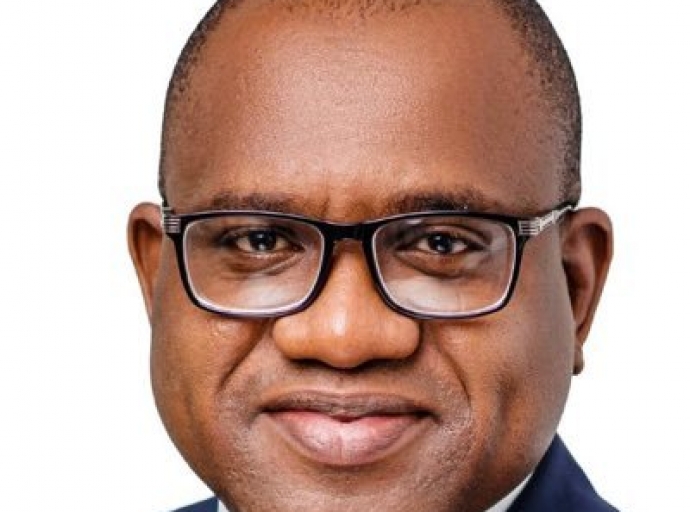
Zenith Bank named Most Valuable Banking Brand in Nigeria

FCMB Continues to Promote SMEs in Nigeria, Extends Financial Support to over 15,000 Women

First City Monument Bank,Nigeria's foremost financial services provider, has continue her aggressive drive and support for the Small and Medium Enterprises sector in the country.

The bank, which was recently voted as the Best SME Bank in Africa, thereby consolidating its position as the dominant financial institution in the segment, has made more funds available to women entrepreneurs through her “SheVenture” initiative.


The SheVentures initiative offers enhanced support to women-owned SMEs and starts-ups through access to finance, training and mentoring with the unique benefit of zero-interest rate for an initial period of three months.

Over 15,000 women-owned SMEs have so far benefitted from this, in terms of funding and training, in the last 18 months.

In recognition of her great contributions to the growth of the small and medium enterprise sector, FCMB was recently voted as the Best SME Bank in Africa at the Asian Banker Middle East and Africa Regional Awards held last year, November 2020, another confirmation of the bank’s unequalled commitment and outstanding performance in offering exceptional services, including funding, capacity building and other value-added supports, to Small and Medium Scale Enterprises.

According to the Asian Banker, FCMB emerged as the Best SME Bank in Africa following, “series of online surveys across the region to gather feedback from thousands of customers per market.

“In the survey, we also asked customers to rate how well their main Banks have helped them during the crisis. The results and rankings are a true reflection of the voice of the customers.”

The organisers further stated: “FCMB has introduced various digital initiatives into the SMEs segment, such as digital loan products (Quickloans) and its New Mobile banking platform.

“In addition, the Bank launched a platform, which was a first of its kind, to help women owned businesses scale up, by leveraging access to financing schemes, mentorship programmes, as well as training and networking opportunities.

“FCMB has equally helped SMEs to enhance capacity, thereby improving their business operations, connect with peers and access to trusted service professionals.


“The Bank has a 25 per cent market share in the SME business, and in 2019 had more than 300,000 new accounts in this segment.

“We commend FCMB for its incredible contributions towards ensuring the growth and sustainable development of SMEs within the region.”

Speaking while receiving the award, the Executive Director, Business Development, FCMB, Bukola Smith, said the emergence of the Bank as the number one in the highly competitive SME category speaks volumes about its journey so far and its contribution to the success of businesses, despite the ongoing challenges posed by the COVID-19 pandemic.

Smith said: “As a resilient, inclusive and responsive institution, we have continued to deploy solutions to transform the challenges posed by COVID-19 to opportunities for our customers by leveraging on our robust technology, digital transformation drive and highly professional team.Our SME Banking offerings have significantly changed lives through job and wealth creation, among other benefits. This is because, we believe that the only way we can succeed is
when our customers succeed. We are very proud to be the Best SME Bank in Africa, particularly coming after KPMG rated us as the Best SME Bank in Nigeria in the 2019 Nigeria Banking
Industry Customer Experience Survey report. This latest award will undoubtedly inspire us to perform better”.

FCMB Continues to Promote SMEs in Nigeria, Extends Financial Support to over 15,000 Women

Africa FINTECH Foundry to Boost Innovation and Techpreneurs with 2021 Accelerator Programme

Africa’s foremost innovation hub, the Africa Fintech Foundry (AFF), has opened up its registration portal for the 2021 Accelerator program.
The initiative, which is being executed in partnership with Access Bank Plc, seeks to fast-track the growth of the best start-ups operating within the African technology ecosystem. The ‘Accelerator’ programme will fast track and assist the selected startups to navigate issues such as start-up pricing and competitiveness, creating endearing customer experiences, support and retention, hiring and people
management, scaling for growth and product development cycle fundamentals amongst others.
Speaking at the launch of the initiative, the Head of the Africa Fintech Foundry, Daniel Awe, said, “Research has shown that 90% of start-ups fail due to various reasons such as lack of funding, being in the wrong market, a lack of research, mis-aligned partnerships, ineffective marketing and poor competitive positioning to name a few.
90% is a high percentage rate of failure. This indicates that many things need to go right for a business to succeed. Enabling start-ups to grow, scale and remain relevant in the tech space is where we play a major role as AFF.” “Since its establishment, the Africa Fintech Foundry has progressively demonstrated leadership in the areas of innovation, financial technology and entrepreneurship. We recognise the vast array of talent possessed by Africans and the wider global players and the immense potential that our technological start-ups have.
Hence, through the Accelerator programme, we will be providing cohorts with mentorship and clinic hours from leading entrepreneurs, investors and industry experts. They will also get access to funding, unrivalled business insights, access to markets and networking opportunities with our partners at various stages of the program,” he said.
The AFF Accelerator programme will span 12 weeks, with formal and informal mentorship from established founders, investors and pioneers across various industries.
Ade Bajomo, Access Bank's Executive Director for Information Technology and Operations, highlighted the need for increased corporate investment in tech-focused capacity building initiatives. He said “Technology can serve as the catalyst for solving many of the problems faced across various industries. We also believe that it holds the potential to resolve social and economic challenges faced across the African
continent. Therefore, as Africa's gateway to the world, we have partnered the continent's leading accelerator, the Africa Fintech Foundry, to create a platform that will nurture the brightest minds, providing them the needed resources to develop and scale their projects, to the benefit of all. Start-ups to be considered for admission into the programme include those that: have a tech-enabled solution; offer a unique solution or unique application in a regional setting; have a cross-functional team with a deep understanding of the market - which includes technical lead(s) and founder(s) that are fully committed to the business; have a defensible position (IP; network effects; domain or region expertise); have been in operations for at least 6 months, amongst others.
Interested participants can visit www.africafintechfoundry.com for more information. Those who meet the required criteria will be required to fill an online application. Entry deadline has been disclosed as Saturday, 31 January 2020. 

Africa FINTECH Foundry to Boost Innovation and Techpreneurs with 2021 Accelerator Programme

Yemisi Edun takes over FCMB as Acting MD

First City Monument Bank (FCMB) now has an acting Managing Director and she is Mrs Yemisi Edun, an executive director,Finance, on the board of the bank.

She is taking over from the Mr Adam Nuru, who stepped aside from the exalted position to allow for an investigation into the allegation of unethical behaviour by him.
He was accused of having a romantic affair with a former employee of the financial institution, Mrs Moyo Thomas. The alleged romance produced two children, according to reports.
The new acting MD/CEO joined FCMB in 2000 as Divisional Head of Internal Audit and Control before assuming the role of Chief Financial Officer of the lender.
The erstwhile executive director in charge of finance at FCMB holds a Bachelor’s degree in Chemistry from the University of Ife, Ile-Ife and a Master’s degree in International Accounting and Finance from the University of Liverpool, United Kingdom.
She is a Fellow of the Institute of Chartered Accountants of Nigeria and a CFA Charter holder and also an Associate Member of the Chartered Institute of Stockbrokers (CIS); an Associate Member of the Institute of Taxation of Nigeria; a Member of Information Systems Audit and Control, U.S.A; and a Certified Information Systems Auditor.
She began her career with Akintola Williams Deloitte (member firm of Deloitte Touché Tohmatsu) in 1987, with main focus in Corporate Finance activities. Mrs Edun was also involved in audit of Banks and Other Financial Institutions.
Yemisi Edun holds a Bachelor’s degree in Chemistry from the University of Ife, Ile-Ife and a Master’s degree in International Accounting and Finance from the University of Liverpool, United Kingdom.

She is a Fellow of the Institute of Chartered Accountants of Nigeria and a CFA® Charter holder. She is also an Associate Member of the Chartered Institute of Stockbrokers; an Associate Member of the Institute of Taxation of Nigeria; a Member of Information Systems Audit and Control, U.S.A; and a Certified Information Systems Auditor.

She began her career with Akintola Williams Deloitte (member firm of Deloitte Touché Tohmatsu) in 1987, with main focus in Corporate Finance activities. She was also involved in audit of Banks and Other Financial Institutions. She joined FCMB in year 2000 as Divisional Head of Internal Audit and Control before assuming the role of Chief Financial Officer of the Bank.

Yemisi Edun takes over FCMB as Acting MD

Access Bank recognised as Nigeria’s safest bank for 2020

For its continued efforts towards ensuring the protection of customer funds and data, Global Finance has named Access Bank the ‘Safest Bank’ in Nigeria for the year 2020. This is part of the platform’s 29th annual World’s Safest Banks rankings. 

Global Finance’s annual rankings of the World’s Safest Banks has been the recognised and trusted standard of financial counterparty safety for more than a quarter-century. The Safest Banks by Country were selected through an evaluation of long-term foreign currency ratings – from Moody’s, Standard & Poor’s and Fitch – and the total assets of the 1000 largest banks worldwide.
Herbert Wigwe, the Chief Executive Officer of Access Bank PLC, commented on the recognition saying, "Throughout 2020, financial institutions all over the world have been faced with peculiarities in safeguarding the finances and data of customers. Through this Access Bank has remained steadfast in its commitment to ensuring that the finances of customers are protected and the data confidentiality of all stakeholders are maintained. This recognition serves as an encouragement for us to build on our successes and invest even more in digitally-led measures that will position us as the World’s Most Respected African bank.
Reiterating Wigwe’s comments, Joseph Giarraputo, publisher and editorial director of Global Finance, “For most of 2020, the world has been lashed by the COVID-19 pandemic, a steep drop in economic activity and, in some cases, serious social unrest. Any of these developments could have significantly impacted banks’ credit worthiness. Surprisingly, however, the relative position of the world’s largest banks on Global Finance’s World’s Safest Banks 2020 lists has been mostly stable. One can only speculate on when, or if, the changes will come. In the meantime, the rankings will be used by companies, investors and individuals to gauge the relative safety of the banks with which they choose to do business.”
As part of its efforts to safeguard the investments and savings of customers, Access Bank PLC introduced the *901*911# - a self-service USSD that enables customers to deactivate their accounts using any alternative phone number should the registered phone be lost or stolen. This gives account holders full autonomy to safeguard their funds before official reports are directed to the Bank.
 
Access Bank recognised as Nigeria’s safest bank for 2020

Change of Baton! Union Bank MD Emeka Emuwa retires as Emeka Okonkwo takes over  


The Board of Union Bank Nigeria Plc announces today that, after eight years leading the Bank, its Chief Executive Officer, Emeka Emuwa, has communicated his decision to retire from the Bank and his role as CEO on March 31, 2021.
Emeka Emuwa joined Union Bank in November 2012, following a $500 million investment by Union Global Partners, with a mandate to transform and restore one of Nigeria’s oldest institutions back to its rightful position as a respected provider of financial services.
With his imminent departure, the Board has appointed Emeka Okonkwo, an Executive Director currently leading the Bank‘s Corporate Banking business, to succeed him. The appointment
is subject to the approval of the Central Bank of Nigeria.
Commenting on his retirement, Emeka Emuwa said; I have enjoyed the significant challenge of leading Union Bank over the last eight years. I am extremely proud of the management team and what we have been able to accomplish during my time as CEO. Today, we have a strong bank that is well positioned to compete and deliver on its vision to be ‘Nigeria’s most trusted and reliable partner.’ With a clear strategic direction, a growing and loyal customer base and a strong brand, this is now the natural time for the next generation of leadership
to take Union Bank forward and deliver further value. In over three decades of banking, my time at Union Bank has been one of the richest
experiences in a long and fulfilling career with a treasure of work and life lessons to carry into the future. Together as a team, we scaled many hurdles and accomplished
significant feats and I would like to thank my Executive team, senior management and every one of our employees for their integrity, support and hard work that have
brought Union Bank to where it is today. I would also like to thank the Board for the opportunity to lead this storied institution
that has impacted generations of Nigerians for over a century and for supporting our efforts and vision during my tenure.
As we begin the transition into a new era of leadership under Emeka Okonkwo, a consummate professional with the right experience and values, I know that Union
Bank will continue on its path as a values driven organisation that is deeply committed to our customers and the communities we serve.
Prior to joining Union Bank, Emeka Emuwa led a distinguished 25-year career at Citibank.  Following several senior roles in Nigeria and across Africa, he became the first Nigerian to
be named Country Officer and Managing Director of Citibank Nigeria.
On his retirement, Emeka Emuwa will also step down from the Board of Union Bank. Union Bank’s Chair, Beatrice Hamza Bassey, said; On behalf of the Board, I would like to thank Emeka Emuwa for leading Union Bank during the last eight years. His exceptional contribution to the transformation of the business produced excellent results and set a solid platform for growth.
The focus over the last eight years on technology transformation, digital innovation, and development of diverse markets for our world class range of products, has seen
Union Bank well positioned to continue growing from its current position as a market disruptor.
Amid a tough macroeconomic environment, Union Bank maintained steady operational momentum under Emeka’s leadership which in 2020 culminated in the first dividend payment to investors and shareholders in over ten years. His many significant achievements, including providing steady stewardship during the unprecedented challenges wrought by the COVID-19 pandemic, lays a solid springboard for the future. We wish him the very best and are grateful for his support and commitment to ensure a successful transition over the next few months.
The Board is pleased to have Emeka Okonkwo as incoming CEO. Having been a key contributor to the achievements of the Bank over the past seven years as an Executive Director, Emeka Okonkwo is well suited to lead Union Bank’s next phase of growth. The Board and I look forward to working with him to execute our strategy
and deliver value to all stakeholders in the years ahead. Emeka Okonkwo is a seasoned banker with 30 years of experience. He joined Union Bank in 2013 as an Executive Director to lead the Corporate Banking and Treasury business. As the Bank embarked on its transformation, he was responsible for rebuilding the business and strategically positioning Union Bank for success in the Corporate Banking space. Mr. Okonkwo began his career at Citibank Nigeria where he rose from officer level to become Executive Director in charge of Commercial Banking and Global Subsidiaries in 2009. At Citibank, he worked across various disciplines including Corporate Finance, Credit Risk Management, Marketing, Treasury and Strategic Management in Nigeria and London. Prior to joining Union Bank, he was the Head of the Corporate and Investment Banking
Division in Citibank Bangladesh. Emeka Okonkwo has a bachelor’s degree in Civil Engineering from the University of Nigeria, Nsukka; an MSc in Construction Management from the university of Lagos and an MBA from Warwick Business School, UK.
 
Change of Baton! Union Bank MD Emeka Emuwa retires as Emeka Okonkwo takes over  
Image

Download Our Mobile App

Image
Image